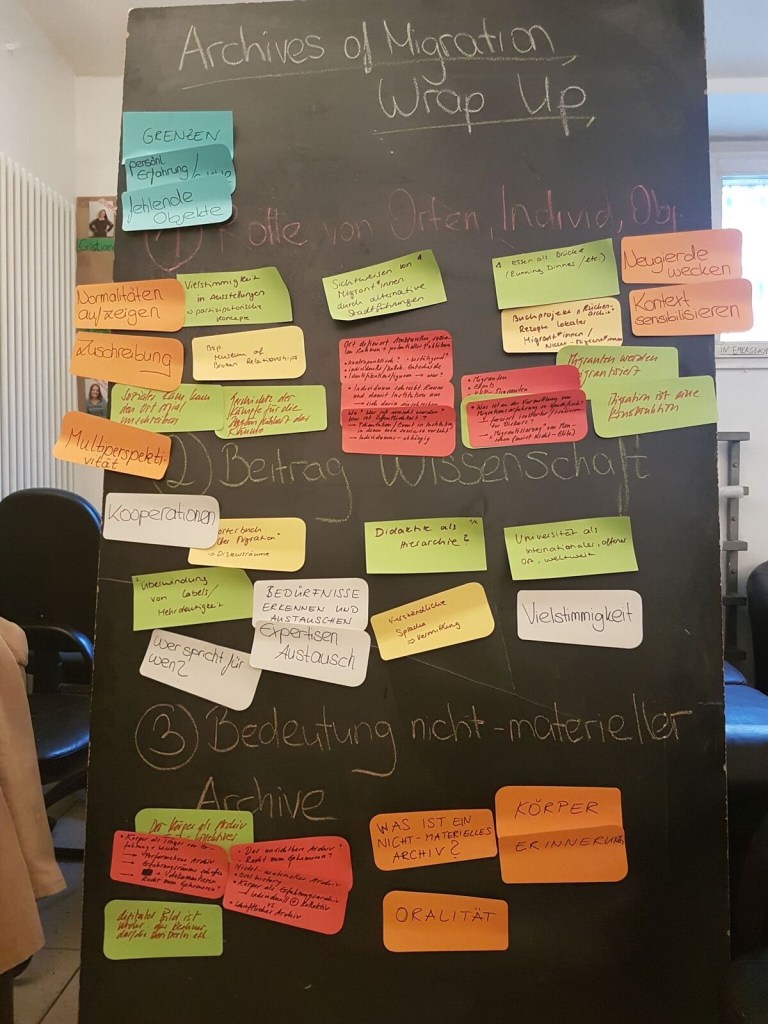
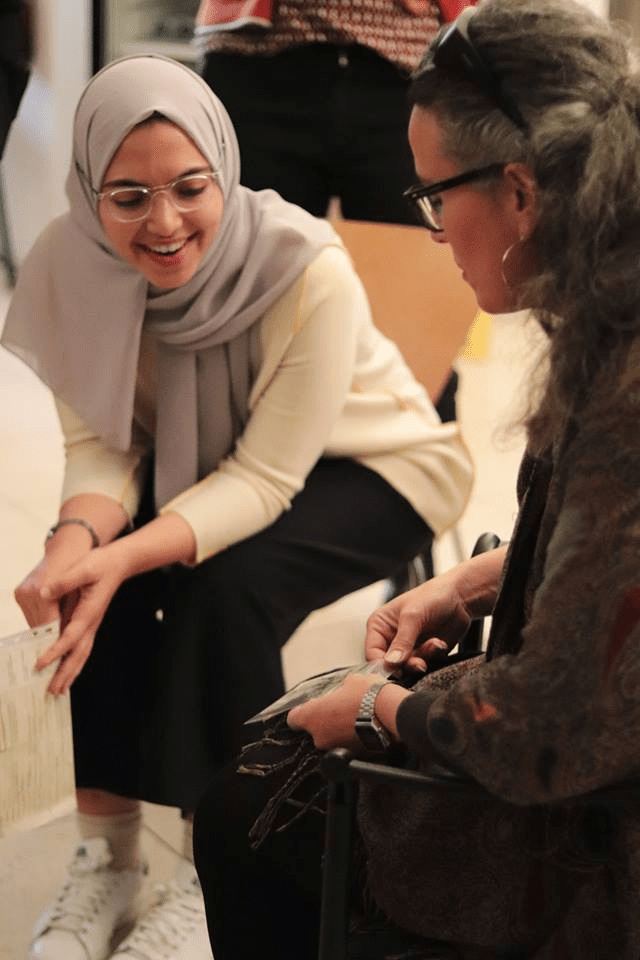
This workshop was held at the Heidelberg Centre of Transcultural Studies on November 16-17 2018. It was organized in cooperation with my colleague Dr. Fiona Siegenthaler (Institute of Social Anthropology, University of Basel and Visual Identities in Art and Design Research Centre, University of Johannesburg) and the non-profit-organization Migration HUB (located at the DAI MAKERSPACE in Heidelberg). The workshop topic emerged from our shared interests in the notion of the archive in context of migration.
The workshop particularly addressed junior/mid-term scholars and artists/photographers and people related to and/or interested in migration and migratory archives.
Archives of migration remain often invisible. Hosting objects of memory, letters, diaries or photographs, such collections contain important knowledge of migrants’ histories and the narratives of individuals, families and larger communities about experiences of displacement, movement and arrival. They are resourceful materials with historical and aesthetic dimensions but often they remain unnoticed or unrecognized by a wider public. Many such private or artistic migratory archives are endangered by loss, misuse or destruction by human or non-human agents due to missing institutional infrastructures.

By bringing anthropologists, artists, photographers and historians together, this laboratory aimed at providing a productive space to discuss and experiment along concrete case studies and rethinking methodological and theoretical approaches that allow an empirical engagement with such sources. What kind of social spaces and social relations do these archives narrate or create? What images of migrants and migration do they represent and how do they relate to or contradict public discourses about migration in different cultural contexts? How can anthropologists and historians collaborate with the producers and owners of these archives to not only document but also introduce the collections to publics in a way that promotes research and remains considerate of the owner’s narrative?
With a particular interest in urban migration studies, we invited scholars to start a comparative discussion. Formats that individual participants chose for the presentation included photographic or visual essays, blogs, social media groups or posters that encourage an engagement of all laboratory members. This workshop not only contributed in methodological and theoretical terms to current research but also opened a space for creative ideas on praxis and create networks between publics and resourceful archives of migration.
Please find the program here.

Participants of the workshop included Simone Pfeifer (Mainz), Ulf Neumann (Cologne), Aurora Rodono (Cologne), Angelika Böck (Munich), Fiona Siegenthaler (Basel), Almut Goldhahn (Florenz), Massimo Ricciardo (Turin) and Gaby Fierz (Basel).
Participants and guests from Migration Hub included Evein Obular (Second Chairwoman, Migration Hub Heidelberg), Mareike Ritter and their guests Rumeysa Turna (Teilseiend, Heidelberg) and Simin Heiderfazel (Children Book Writer; The Afghan Volunteer Women‘s Association Heidelberg, Heidelberg). See also MIGRATION HUB


 Cathrine Bublatzky